
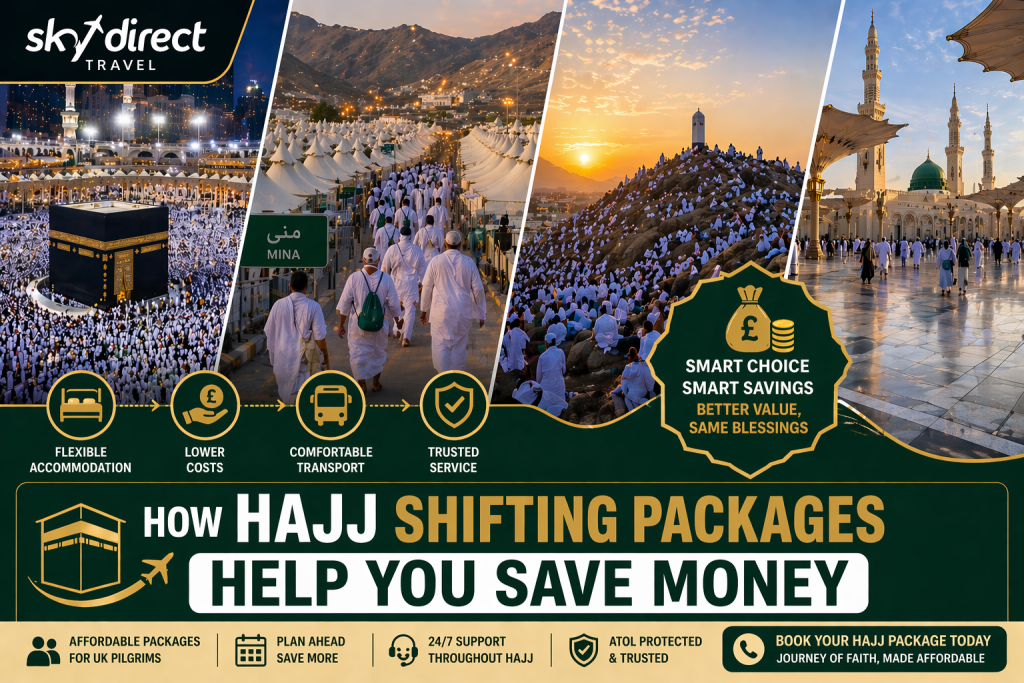
Planning your pilgrimage can be both exciting and overwhelming, especially when budgeting for the journey. A Hajj shifting package is one of the most practical ways UK pilgrims can reduce costs while still experiencing a smooth and comfortable Hajj. Unlike fixed luxury packages, shifting packages offer flexible accommodation options that help lower overall expenses.
Therefore, if you are looking to perform Hajj without overspending, understanding how these packages work is essential. In this guide, we will explain how Hajj shifting packages save money, what benefits they offer, and whether they are the right choice for you.
What Is a Hajj Shifting Package?
A Hajj shifting package is a travel plan where pilgrims stay in different accommodations during various stages of Hajj.
How It Works:
- Stay in hotels closer to Haram before Hajj days
- Shift to more affordable accommodations during peak days (Mina, Arafat)
- Return to standard hotels after rituals
This flexible arrangement helps reduce costs without compromising essential services.
How Hajj Shifting Package Helps You Save Money
1. Lower Accommodation Costs
Hotels near Haram are expensive during peak Hajj days. However, shifting packages:
- Use premium hotels only when needed
- Switch to budget-friendly options during peak days
Therefore, you avoid paying high rates for the entire stay.
2. Efficient Use of Resources
Instead of paying for luxury throughout:
- You pay only for essential comfort periods
- You optimize spending based on your itinerary
This smart allocation significantly reduces overall expenses.
3. Reduced Package Prices
Compared to non-shifting packages:
- Shifting packages are more affordable
- They offer similar core services
- They maintain comfort while cutting unnecessary costs
4. Flexible Pricing Options
Many providers offer:
- Budget-friendly packages
- Mid-range shifting options
- Customizable plans
This flexibility makes Hajj accessible to more pilgrims.
Key Benefits of Choosing a Shifting Package
✔ Cost-Effective Travel
The biggest advantage is affordability. You save money without missing key experiences.
✔ Balanced Comfort
You still enjoy:
- Comfortable hotels before and after peak days
- Organized transportation
- Guided support
✔ Better Availability
Since shifting packages are more flexible:
- They are often available even when premium packages are sold out
✔ Ideal for Budget-Conscious Pilgrims
If you want to perform Hajj without financial strain, this is a practical option.
Who Should Choose a Hajj Shifting Package?
A Hajj shifting package is suitable for:
- First-time pilgrims on a budget
- Families looking to reduce overall cost
- Individuals comfortable with minor adjustments in accommodation
- Pilgrims prioritizing spirituality over luxury
However, if you prefer constant premium comfort, a fixed luxury package may suit you better.
Things to Consider Before Booking
Before selecting a package, evaluate the following:
Important Factors:
- Distance of accommodation from Haram
- Transportation arrangements during shifts
- Group size and guidance support
- Reputation of the travel agency
Tip: Always book through a trusted provider to ensure a smooth experience.
Tips for UK Pilgrims
To maximize savings and comfort:
- Book your package early
- Compare multiple providers
- Check reviews and certifications
- Prepare physically for walking distances
- Understand the shifting schedule clearly
Moreover, early planning ensures better deals and availability.
FAQs
1. What is a Hajj shifting package?
A Hajj shifting package involves staying in different accommodations during different phases of Hajj to reduce costs.
2. Is a shifting package cheaper than a standard package?
Yes, it is generally more affordable because it avoids high hotel costs during peak days.
3. Is comfort compromised in shifting packages?
No, basic comfort and essential services are maintained throughout the journey.
4. Are shifting packages suitable for families?
Yes, many families choose them to manage costs effectively.
5. When should I book a Hajj shifting package?
You should book at least 6–12 months in advance for better pricing and availability.